A huge number of people have seen or heard
a person or an animal after they have died. Very often people
will tell you that someone they loved appeared at the foot
of their bed and told them that they had just died. In many
such cases the death was unexpected and the person had died
just before they were seen.
HISTORY AND INCIDENCE
These after death contactshave
been studied scientifically since 1882 when a study was
begun in England. Altogether 32,000 cases were recorded,
17,000 in English. It was published in Volume X of the Society
for Psychical Research Proceedings (1894).
Further studies were carried out by the
American Society for Psychical Research and by the French
researcher Camille Flammarion who compiled thousands of
cases in his books The Unknown (1900) and Death
and Its Mystery (1925).
All the researchers found that many people in every country
experienced after death communications.
In 1973 a University of Chicago sociologist
asked a sample of 1,467 Americans if they had ever felt
they had contact with someone who had died. Twenty seven
per cent answered that they had (Greenley 1975). A similar
survey in Iceland (Haraldsson et al 1976) found that thirty-one
per cent said yes.
Dr. W.D. Rees, a British physician found that of a sample
of widows in Wales, forty seven per cent had experiences—often
repeatedly over a number of years—that convinced them
that their dead husbands had been in contact with them (Rees
1971: 37-41). An earlier British experiment by Dr P. Marris
(1958) had found a figure of fifty per cent.
Dr. Melvin Morse, a pediatrician who has done many studies
of death and dying, claims that they are so common that
it is rare for someone to lose a child and not see them
again in a death-related vision (Morse 1994: 135).
EVIDENCE THAT ADCS ARE NOT HALLUCINATIONS Ken Vincent examined 1667 published ADC cases and found that 336 (20.1%) could be considered evidential. These cases fall into three commonly researched categories: (1) Apparitions appearing before the experiencer’s knowledge of the death of their loved one (APD) numbered 180, (10.8%) of the sample.
(2) Apparitions appearing to multiple witnesses (AMW) numbered 57, (3.4%) of the sample.
(3) Apparitions that convey knowledge unknown to the experiencer that is later proven to be true (AKU) numbered 99, (5.9%) of the sample. Read Ken Vincent's excellent analysis.
THE OPEN-MINDED SKEPTICS GUIDE TO AFTER-DEATH CONTACTS
After Professor Sylvia Hart Wright's husband Paul died in 1983, Wright and her son jointly had an experience that suggested that Paul was trying to contact them. At this time two of his male friends reported similar events. This was startling to people steeped in the scientific method and agnosticism! Scholar that she was, Wright started researching the writings of doctors and social scientists on such phenomena and in time interviewed almost a hundred healthy, everyday people who had sensed contact with the dead. "When Spirits Come Calling: The Open-Minded Skeptic’s Guide to After-Death Contacts, is the book which grew out of this work." Read the first chapter.
Professor Wright left her position at the City University of New York in 1991 to devote herself full time to afterlife research.
TYPES OF SPONTANEOUS AFTER-DEATH COMMUNICATION Recent research shows that people who die make their presence known in some of the following ways.
(1) Sensing their presence
(2) Hearing their voice
(3) Feeling their touch
(4) Smelling something associated with them
(5) Seeing them as if they were real
(6) Seeing a flat vision of them like a photo
(7) Experiencing one of these while half-asleep
(8) Having a visit in a dream- but the dream is unusually vivid and you do not forget it like a normal dream
(9) Having an out-of-body experience and meeting them
(10) Receiving a telephone call from the person who died (two-way conversations have been reported.)
(11) Experiencing electrical appliances such as lights, doorbells, TVs, and radios going on and off
(12) Receiving a symbolic message, sign, meaningful coincidence, or synchronicity.
COMMUNICATIONS THROUGH WHATSAPP
Louise Hamlin was a solicitor and then a law fellow and lecturer at Cambridge University. In 2006, she moved down to Dorset to start a new life, but suddenly and unexpectedly her husband died. In her immense grief, she started to recognize signs that her husband was sending her that could only have come from him.
Her book "WhatsApps from Heaven: Bereavement in the Twenty-first Century" is a book about bereavement and also about the many extraordinary happenings and signs from the afterlife that then followed.
MESSAGE FROM DAD SAVES A CHILD'S LIFE
Judy Guggenheim talks with John Edward about how she and later her husband Bill Guggenheim discovered After-Death Communication. Their 1997 book "Hello From Heaven" did a great deal to raise awareness of ADCs.
THE MESSAGES THEY SEND US Our loved ones on the other side may have to take lessons on how to send us messages - some are better at it than others. They want to let us know that they are fine, that they are still living, just in a different location, and that they have met up with friends and loved ones. They also want to assure us that we'll be reunited with them when our time comes. They want us to remember the happy times and go on with our lives and, in particular, they ask us NOT to grieve for them.
ERIC ZIMMERMAN - "BEYOND CHANCE"
In some cases, particularly soon after a person has transitioned to spirit, they have fully materialised and been able to comfort a loved one. In this case, Fred & Marilyn Zimmerman heard, saw, and felt their police officer son, Eric, soon after he was killed. Later they were able to confirm what they had experienced in a comforting detailed reading with well-known medium George Anderson.
COLLECTION OF ADC CASES
The After Death Communication Research Foundation conducted by Jody Long and Dr. Jeff Long asks people to send in, through the Internet, details of their after-death communication. It contains more than 1800 recent cases from all over the world. It also has information about grief and life after death.
DREAM VISITS
Researchers in cross-cultural studies found that about half of all reported spontaneous psychic experiences occurred in dreams and that dream visits are the most frequently reported method of after-death communication. Usually the loved one appears healthy and much younger. Unlike normal dreams, these contact dreams don’t fade with time. They are incredibly vivid and you will be able to remember details even years later.
SIGNS FROM SPIRIT: THE WORK OF JOSEPH M. HIGGINSJoe Higgins, a medium and teacher of mediumship, has brought relief and comfort to countless people over the years and he has worked on missing person cases, cold cases, and murder investigations, as well as connecting clients to their loved ones, who have passed to the other side. He has written four superb books:
1) 'Hello...Anyone Home? : A Guide on How Our Deceased Loved Ones Try to Contact Us through the Use of Signs'.
2) 'The Everything Guide to Evidence of the Afterlife: A scientific approach to proving the existence of life after death'.
3) 'Always Connected for Veterans: Deceased Vets Give Guidance From The Other Side' and
4) 'I Got Your Message: Understanding Signs From Deceased Loved Ones' (Always Connected Series).
Many appear at the time of death
A very large number of cases involve a person
who has recently died appearing to one or more loved ones.
Sometimes, in the case of a child's death, a grandparent
will appear telling the parent the child is now with them.
Typical is the case of Mrs. Gladys Watson who woke up from
a deep sleep when someone called her name. She saw her grandfather
who told her 'Don't be frightened. It's only me. I've just
died.' When she woke her husband he refused to believe it.
But when they telephoned the family home they learned that
the grandfather had died unexpectedly a few minutes before
(Spraggett 1975: 45-46).
Jamie Turndorf - Love Never DIe Jamie shares the story of her ongoing
contacts with her husband.
The Most Frequent Messages Expressed by the Departed
According to the Guggenheims, the purpose of such contact
is to offer comfort and hope to surviving family and friends.
They want us to know they're still alive and that we'll
be reunited with them when our time comes. Their most frequent
messages, expressed verbally or non-verbally, are:
I'm okay ... I'm fine ... Everything is okay ... I love
you ... Everything will be all right ... I'm watching over
you ... I'll always be there for you ... Don't worry about
me ... Don't grieve for me ... Please let me go ... I'm
happy ... I'll see you again ... Go on with your life ...
Please forgive ... Thank you ... Good-bye.
How the Guggenheims discovered After Death Communication
DR. MARK PITSTICK talks about After death contacts.
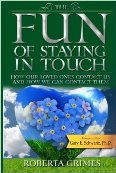
Roberta
Grimes' The Fun of Staying in Touch: How our Loved Ones
Contact Us and How We can Contact Them is a new
book which outlines many recent methods of communication
including signs and synchronicities. She explains how those
in the spirit world are able to use energy to direct insects
(especially butterflies and dragonflies) close to a person.
Read
more...
CONTACT DREAMS
Dream communication is the most frequently reported method
of after death communication. Researchers in cross cultural
studies found that about half of all reported spontaneous
psychic experiences occurred in dreams.
Unlike normal dreams, contact dreams don’t fade with
time. They are incredibly vivid and you will be able to
remember details even years later. The person who has died
usually looks much younger and in perfect health. They are
smiling and telling you that they are fine and happy. They
tell you that they did not suffer during their passing and
that they are with family members. You may wake up with
a feeling that they have hugged and kissed you. Some contain
evidence that suggest it was more than just a dream.
Mediums and out of body explorers tell us that our astral
body lifts out of our physical body when we sleep and we
actually visit with our loved ones in the afterlife. It
is a world just as solid as ours but on a different frequency.
Some contact dreams are fragments of memory of those visits.
Those living in the afterlife are surprised that we don’t
remember anything about these visits but we are told that
when we finally cross over we will remember each one.
Some dream communications can be verified.
One case, the Chaffin Will case, was intensively
investigated and accepted by the American courts. A father
who had died appeared in the dreams of one of his sons and
gave him details of how to find his last will (Fontana 2005:52-3).
Diane Arcangel relates the case of Charles Vance
in her book Afterlife
Encounters. He began having recurring dreams about his
deceased friend Murphy. The friend kept telling him to get
a message to Murphy’s widow Lorraine to look inside
a wall in their house. Charles Vance eventually called Lorraine
who broke into the wall. She reportedly found thousands
of dollars hidden there. When Lorraine called her own daughter
(who did not know Charles Vance) she found that the daughter
had been having the same dreams but had disregarded them
(Arcangel 2005:74-85).
Claire Sylvia was a dancer who had a heart-lung
transplant and began having vivid dreams about her donor.
She discovered: ‘He is tall, has sandy colored hair
and his name is Tim L.’ The story of how she finally
traced the donor’s family through a series of dreams
is told in full in her book A
Change of Heart: A Memoir (Sylvia and Novak 1998).
My life After Life:A Posthumous Memoir
The journey began for Dr. K. Paul Stoller one evening in
2007 when he received a phone call from the state police
that his 16-year-old son Galen had been killed. Shortly
thereafter, Dr. Stoller's son appeared and eventually began
to communicate with him in dream states. Dr. Stoller experienced
difficulty in accepting what was happening to him-both the
stress of the loss and the stress of the contact. Eventually
convinced that it was his son, Dr. Stoller began journaling
hundreds of pages of communication from Galen about his
new circumstances, which led eventually to this book. Read
more...
Asking for a contact dream
Phone calls from the Dead
There have been many reports of phone calls or messages
left on answerphones by someone who has died. Sometimes
the person who receives the phone call is not aware that
the person has died.
Sometimes multiple calls are made from the phone of a crash
victim. Sometimes the calls are simply dead air or filled
with static, but the calls are traced to old disconnected
numbers that once belonged to relatives.
COLLECTIONS OF ADC CASES
The After Death Communication Research Foundation conducted
by Jody Long and Dr. Jeff Long asks people to send in details
of their after death communication through the internet.
It contains more than a thousand recent cases from all over
the world. It also has information about grief and life
after death.
Professor discovers the afterlife When
her husband died in 1983 Professor Sylvia Hart Wright and
her son jointly had an experience that suggested he was
trying to contact them from beyond the grave; two of his
male friends reported similar events. Using her academic
skills Wright started researching the writings of doctors
and social scientists on after death communications and
in time interviewed almost a hundred healthy everyday people
who had sensed contact with the dead. The result was her
book When Spirits Come Calling: The Open-Minded Skeptic's
Guide to After-Death Contacts {
Read online}
Feathers Brush My Heart: True Stories of Mothers Connecting
with their Daughters after death The women who
contributed stories to Sinclair Browning's bookare of all ages and income brackets. Dreams, impressions,
and objects all figure strongly, and many women write of
the particular significance of a special flower, ribbon,
vase, or article of clothing. Linda Blanchard saw her mother
as an angel in a dream and Carolyn Niethammer felt her mother's
arms keep her safe when she was hit by a drunk driver. Read
more...
JOSEPH M. HIGGINS has
been a working medium for over 15 years. He has complied
two excellent books on Signs.
In Got
Your Message!: Understanding Signs From Deceased Loved Ones
Joe explains why millions believe in signs from the
departed…and you should too! • What we can learn
from signs • Why people refuse to accept signs •
Why don't I get a sign? • Do children see signs more
than adults? These and of other inquiring questions will
be answered in this book as well as
about 50 accounts from people who have received signs and
contact.
U.S.
9/11 victims make contact from the afterlife.
This video above promotes the book "Messages-
Signs, Visits and Premonitions from Loved Ones lost on 9/11"
by Bonnie McEneaney whose husband Eamon, died in the attacks
on the World Trade Center. A mother and former business
executive, Bonnie was always skeptical of the spiritual
world but after talking to a number of other families and
friends of loved ones lost on 9/11, she realized she was
not alone.
Families of 9/11 victims reach out to their families.
Messages from loved ones on 9/11
EXTENDED AFTER DEATH COMMUNICATION
WITH A PARTICULAR PERSON A child who committed suicide communicates
directly with his mother Anne Puryear's son Stephenkilled himself at the age of 15.He
began to communicate directly with her and virtually dictated
this wonderful book, Stephen Lives, that will be of help
to any grieving parent. Has excellent resources on suicide.Read
more..
Scientifically trained doctor
experiences ADCs with her son. Dr. Elisa Medhus
never believed in life after death. As an accomplished physician,
she placed her faith in science. All of that changed after
her son Erik took his own life and then reached out from
the other side. After a number of after death communications
she found a medium who was able to bring through detailed
confirmation and messages from Erik. Dr Medhus' new book
Conversations
with My Son in the Afterlife has just been released.
A Swan in Heaven: Conversations Between Two Worlds Terri
Daniel's book blends thought-provoking narrative with stirring
afterlife messages from a 16 year-old boy who began communicating
with his mother telepathically after his death. What makes
this account unique in the world of channeled books is that
during his life, this extraordinary child was severely disabled
and unable to speak. But after death his language was fluent
and his words were insightful, inspired and eloquent. Read
more...
Terri has gone on to conduct the
Afterlife Awareness Foundation
Terri Daniel interviewed for Conscious Media Network
The Afterlife of Billy Fingers
One of the most detailed and profound ADC's ever recorded,
Kagan's book takes the reader beyond the near-death experience.
Billy's vivid, real-time account of his on-going journey through
the mysteries of death will change the way you think about
life. Death and your place in the Universe.
Signals by Joel Rothschild This book was number
1 on Amazon. com in 2000.
Joel Rothschild and his friend Albert, both HIV positive,
made a pact: whoever died first would attempt to "signal"
the other from beyond. Joel wasn't sure he believed in psychic
abilities, but from the day Albert died he began receiving
messages. One message led Joel to a note Albert had left for
him before he died. Another message told Joel to hang in there
when he became sick, that he would get well - and he did.
Albert's messages have changed not only Joel's life but the
lives of many others who have been helped by messages Joel
has delivered to them. Their stories and Joel's psychic awakening
- a transformation from cynic to believer - are both amazing
and reassuring. Read
more...
Josie Varga- Visits from Heaven
Carol Morgan and Mikey Carol Morgan is a happily married mother of two
sons, one of whom, Mikey, passed into Spirit in 2007 at the
age of 20. Mikey began to give her signs of his survival almost
immediately. He seemed to have engineered Carol's meeting
with Spiritual Medium Sally Baldwin of the Dying
To Live Again Foundation at the Foundation's Mother-Child
Reunion Retreat in 2009. There, Sally taught her to communicate
with Mikey using a pendulum. Without mediumistic abilities
or any prior knowledge or skill, Carol has practiced her pendulum
communication techniques so rigorously over the past four
years that Carol and Mikey are now in regular contact. They
work together to answer questions on Afterlifeforums.com
and elsewhere, and provide detailed afterlife education for
people from all over the world.
There are many reasons why many ADCs cannot
be regarded as imaginationor the product
of the unconscious mind.
1. The witnesses were relaxed
In most of these cases the person are in
a perfectly ordinary state of mind, free from shock or stress.
In many cases the witnesses are scientifically trained people
of high credibility.
2. Objective phenomena.
Sometimes the spirit visitor moved or broke
an object. Sometimes footsteps have been recorded on tape.
Some cast a shadow, were reflected in a mirror, overturned
furniture, left a scent.
In some cases the person who appearedeven left behind samples of their handwriting.
Dr Elisabeth Kübler-Ross, a gifted doctor who pioneered
the study of death and dying, claims that a former patient
appeared to her when she was thinking of giving up her work.
The woman, Mrs. Schwartz, got into a lift with her and accompanied
her to her office where she told her not to give up her
work on death and dying. Kübler-Ross thought that she
must be imagining it because the woman, Mrs. Schwartz, had
died ten months earlier. But when she asked her to write
date and sign a note the woman did so before disappearing
(Kübler-Ross 1997: 178).
3. Experienced by more than one
person
Many of the recorded cases have been seen
by more than one person. For example in a case investigated
by the Society for Psychical Research, nine people resident
in a house in Ramsbury, England saw a man who had died ten
months previously. He was always seen beside his dying widow's
bedside with his hand placed on her forehead and was visible
for up to half an hour at a time (Holzer 1965: 52-56).
Professor Hart in his book The Enigma
of Survival (1959) claims that between one third and
two thirds of all people who appear after death are seen
by more than one person, and are seen differently by each
viewer according to the position the viewer is sitting in.
4. Sharing information not known
to the observer
In many cases the person who appears tells
the observer information about how they died, where they
were buried, or other information not known to the observer.
In one famous case accepted by the American Courts—the
Chaffin Will case—a father who had died appeared and
talked to one of his sons and gave him details of where
to find his will.
In some cases people come to save loved
ones from danger. This happened to Elaine Worrell who lived
with her husband Hal on the top floor of an apartment building
in Oskaloosa, Iowa. One day she saw a young man in her hallway
who led her downstairs into the apartment of a young widow
she barely knew. She found the young woman collapsed on
a bed after having slashed her wrists. After she recovered,
the young woman showed her a photograph of her late husband;
Elaine recognized it immediately as the young man who had
led her downstairs and into the apartment (Holzer 1963:
138-141).
5. Some leave physical evidence
After Death Contact Researcher talks with Dr Heidi Horsely
The Open to Hope Foundation Run by mother and daughter Drs Gloria and Heidi
Horsely theOpen
to Hope Foundation is the largest and most trafficked
grief website on the Internet. They have over 300 regular
contributors, who have written over 3,000 articles. They
have produced over 350 radio shows, 100 YouTube forums,
two self-published books,—all focused on grief, loss,
hope, and healing. They also have an international calendar
where people and organizations from around the world can
list their upcoming workshops, camps, and events related
to grief and healing. They are very supportive of discussions
about Afterlife Death Communication and the Afterlife. Watch
videos.
CHRISTINE DUMINIAK
is a Certified Grief Recovery Specialist, who runs a free
online Prayerwave Group
which helps people process their ADC and pray to have one
with their loved ones. Here she talks with a priest and
a rabbi about ADCs
SUGGESTIONS FOR HAVING YOUR OWN
AFTER DEATH CONTACT
See our page on Grief
Resources
WHAT ABOUT RELIGION?
THE VATICAN SAYS DIALOGUE WITH THE
DEAD IS POSSIBLE by John
Hooper
London Observer Service ROME - One of the most authoritative
spokesmen of the Roman Catholic Church has raised eyebrows
among the faithful by declaring that the Church believes
in the feasibility of communication with the dead.
The Rev. Gino Concetti, chief theological commentator for
the Vatican newspaper, L’Osservatore Romano, denied
he was signaling any change in approach. But he agreed that
his remarks might come as a jolt to many believers.
He said the Church remained opposed to the raising of spirits,
but added: "Communication is possible between those
who live on this earth and those who live in a state of
eternal repose, in heaven or purgatory. It may even be that
God lets our loved ones send us messages to guide us at
certain moments in our life.
"His comments were first made in support of an American
theologian, the Rev. John Neuhaus. Neuhaus had described
how a friend had seen a ghost. He said there were various
explanations, but "the important thing is not to deny
such things a priority."
Concetti said the key to the Church’s attitude was
the Roman Catholic belief in a "Communion of Saints,"
which included Christians on earth as well as those in the
after-life. "Where there is communion, there is communication,"
he said.
Concetti suggested dead relatives could be responsible for
prompting impulses and triggering inspiration - and even
for "sensory manifestations," such as appearances
in dreams.
Concetti said the new Catholic catechism specifically endorsed
the view that the dead could intercede on earth and quotes
the dying St. Dominic telling his brothers: "Do not
weep, for I shall be more useful to you after my death and
I shall help you then more effectively than during my life."
This article was published by London Observer Service on
January 31, 1999 and was written by John Hooper.
Other useful websites on ADC:
Louis La Grand: "Messages and Miracles
"After Death communications. Final Farewells" Love
Lives On
Video: Conference presentation: The extraordinary experiences
of the bereaved: Clinical and Practical applications.



 Recent research shows that people who die make their presence known in some of the following ways.
 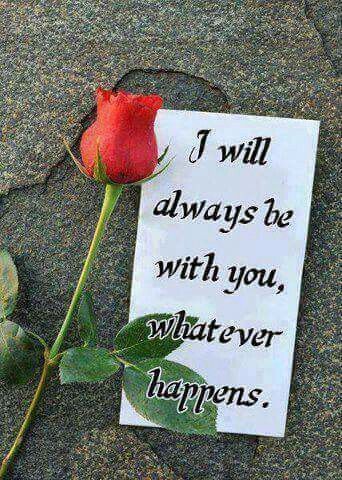 Our loved ones on the other side may have to take lessons on how to send us messages - some are better at it than others. They want to let us know that they are fine, that they are still living, just in a different location, and that they have met up with friends and loved ones. They also want to assure us that we'll be reunited with them when our time comes. They want us to remember the happy times and go on with our lives and, in particular, they ask us NOT to grieve for them.
  has brought relief and comfort to countless people over the years and he has worked on missing person cases, cold cases, and murder investigations, as well as connecting clients to their loved ones, who have passed to the other side. He has written four superb books:
  Roberta
Grimes' The Fun of Staying in Touch: How our Loved Ones
Contact Us and How We can Contact Them is a new
book which outlines many recent methods of communication
including signs and synchronicities. She explains how those
in the spirit world are able to use energy to direct insects
(especially butterflies and dragonflies) close to a person.
Roberta
Grimes' The Fun of Staying in Touch: How our Loved Ones
Contact Us and How We can Contact Them is a new
book which outlines many recent methods of communication
including signs and synchronicities. She explains how those
in the spirit world are able to use energy to direct insects
(especially butterflies and dragonflies) close to a person.
 The journey began for Dr. K. Paul Stoller one evening in
2007 when he received a phone call from the state police
that his 16-year-old son Galen had been killed. Shortly
thereafter, Dr. Stoller's son appeared and eventually began
to communicate with him in dream states. Dr. Stoller experienced
difficulty in accepting what was happening to him-both the
stress of the loss and the stress of the contact. Eventually
convinced that it was his son, Dr. Stoller began journaling
hundreds of pages of communication from Galen about his
new circumstances, which led eventually to this book.
The journey began for Dr. K. Paul Stoller one evening in
2007 when he received a phone call from the state police
that his 16-year-old son Galen had been killed. Shortly
thereafter, Dr. Stoller's son appeared and eventually began
to communicate with him in dream states. Dr. Stoller experienced
difficulty in accepting what was happening to him-both the
stress of the loss and the stress of the contact. Eventually
convinced that it was his son, Dr. Stoller began journaling
hundreds of pages of communication from Galen about his
new circumstances, which led eventually to this book. 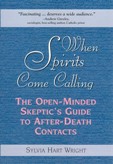 When
her husband died in 1983 Professor Sylvia Hart Wright and
her son jointly had an experience that suggested he was
trying to contact them from beyond the grave; two of his
male friends reported similar events. Using her academic
skills Wright started researching the writings of doctors
and social scientists on after death communications and
in time interviewed almost a hundred healthy everyday people
who had sensed contact with the dead. The result was her
book When Spirits Come Calling: The Open-Minded Skeptic's
Guide to After-Death Contacts {
When
her husband died in 1983 Professor Sylvia Hart Wright and
her son jointly had an experience that suggested he was
trying to contact them from beyond the grave; two of his
male friends reported similar events. Using her academic
skills Wright started researching the writings of doctors
and social scientists on after death communications and
in time interviewed almost a hundred healthy everyday people
who had sensed contact with the dead. The result was her
book When Spirits Come Calling: The Open-Minded Skeptic's
Guide to After-Death Contacts {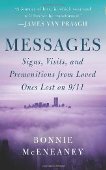 U.S.
9/11 victims make contact from the afterlife.
U.S.
9/11 victims make contact from the afterlife. 